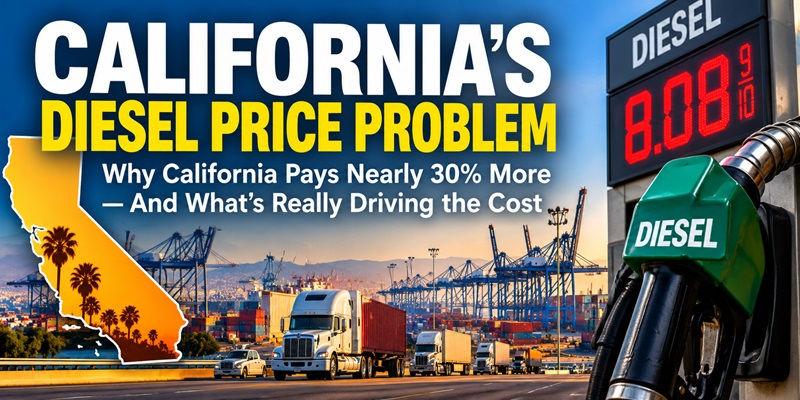
Why Gas Is So Expensive in California — Explained Clearly

Updated: Dec 19, 2025
Drivers in Compton, Carson, Long Beach, Lynwood, Watts, and South Gate have noticed a modest drop in gasoline prices. California still has the highest fuel costs in the country, but the recent decline has real, concrete causes. Here is the straight, factual explanation — without myths, fluff, or misleading seasonal theories.

1. U.S. Oil Production Has Surged Hugely in the Current Trump Era
The biggest reason for lower fuel prices is simple:
America is producing much more oil again — fast.
Under the current Trump administration, most of the major federal barriers that had previously during Biden era slowed or limited energy production were either repealed or heavily weakened.
Some state regulations which regulated state-owned land were uneffected from Trump policy change. Yet, only about 9% of all U.S. land is state-owned. Well over 90% of the country’s land (federal + private owned) became easier, faster, and cheaper for energy companies to drill on.
Once those barriers fell, the energy sector moved quickly:
more drilling
more fracking
more wells
more pipelines
more output
The result is straightforward:
In Trump’s first year back in office, U.S. oil production surged, global oil supply increased, and worldwide crude prices dropped. Because California relies heavily on imported crude priced off global markets, that lower world price translates into cheaper refinery input costs — which helps bring down the final pump price in places like Compton.
2. California Benefits Because Its Refineries Rely on Imported Crude
Most California refineries cannot process light shale oil from Texas and other domestic fields. They rely on imported medium and heavy crude from:
Ecuador
Brazil
Colombia
Iraq
Saudi Arabia

The crude imports into California are priced according to global crude benchmarks, not according to local California policy. So when U.S. production increases, world supply grows and global crude prices fall. Consequently:
California’s imported crude becomes cheaper.
California’s high taxes and strict fuel rules add cost, but lower global crude prices still apply substantial downward pressure at the pump — and that effect is now becoming visible.
3. Temporary Refinery Stability in California
California has only 11 operating refineries left, and the system is extremely fragile. A single unexpected outage can spike prices overnight.
Recently, nothing went wrong:
no fires
no shutdowns
no surprise maintenance
no supply interruptions
This rare stretch of stability allowed prices to drift downward instead of jumping upward — something California drivers rarely experience.
4. California’s Refinery Collapse and Import Costs
During the 1980s, California had more than 40 refineries. Today only 11 remain, and about three-quarters of them depend on imported foreign crude.

Because California cannot produce or refine enough fuel to meet its own demand, we, the drivers pay extra for:
marine shipping
tanker transport
port fees
pipeline movement
California-only gasoline formulations
strict state environmental requirements
These costs normally keep California fuel prices among the highest in the nation. But when global crude becomes cheaper, some of that pressure eases.
5. California’s Special CARB Gasoline Formula (Why Our Fuel Is So Expensive)

California requires a unique California-Only gasoline blend (CARB gasoline) created by the California Air Resources Board (CARB), mandated statewide in 1996.
This blend is more expensive to make, harder to produce, and cannot be imported from other states.
CARB gasoline was implemented under Governor Pete Wilson, a Republican who governed as a centrist and supported several environmental and regulatory policies that modern conservatives would reject.
The decision was entirely a California state policy, not a federal one.
This special blend isolates California from the rest of the U.S. fuel market and adds significant extra cost to every gallon sold in the state.
6. No Recent Supply Disruptions
California’s fuel prices spike immediately within days because of:
refinery maintenance shutdowns
post fire repair shutdowns
tanker shortages
port backlogs
pipeline constraints
Recently, none of these disruptions occurred. In a system with almost no spare capacity, a calm period alone provides slight price relief.
7. Market Correction After Earlier Price Spikes
California fuel prices regularly overshoot during refinery trouble. Once supply recovers, the market corrects downward. Part of the recent decline simply reflects normalization after earlier California-specific spikes.
8. Why Compton and Surrounding Communities Are Hit Harder Than Most
Compton, Lynwood, Watts, Carson, South Gate, and the surrounding South LA region feel gas price spikes more sharply than many other parts of California for several overlapping reasons:
1. Driving is still the main way people get to work
Compton has Metro rail service and multiple bus lines, but most residents still rely on cars because job locations across LA County often require long distances, multiple bus transfers, or commutes outside rail coverage. So when gas prices rise, families here feel it quickly.
2. Lower median household income
Compton and nearby communities have lower median incomes than the statewide average.That means rising gas prices take a bigger share of household income, forcing families to cut back on essentials to afford fuel.
3. More workers in driving-dependent jobs
A large portion of local residents work in industries that require:
commercial driving
delivery driving
commuting across the county
service jobs far from home
trades and construction requiring daily travel
caregiving or visiting multiple sites
High gas prices directly reduce take-home pay for these workers.
4. Fewer local refueling alternatives
Neighborhoods in South LA often have fewer gas stations per square mile, less competition, and fewer low-cost stations compared to wealthier areas.
Less competition = higher local pump prices on average.
5. No cushion when California prices spike
Because California’s fuel system is fragile and Compton residents rely heavily on driving, any statewide spike hits this region harder. Communities with higher incomes or shorter commutes can absorb price spikes better. Compton cannot.
6. Higher cost of basic goods due to fuel overhead
When fuel costs rise, delivery costs rise — and local stores pass that cost down. In working-class communities, this means:
higher grocery prices
higher goods and service prices
increased transportation costs for everything entering the city
High gas prices ripple through the entire local economy.
⭐ Plain-English Summary
Compton and surrounding communities are hit harder because people depend more on driving, earn less on average, work in jobs that require travel, have fewer cheap service stations nearby, and feel the impact of California’s high and unstable fuel system more sharply than wealthier areas.
* Footnote 1 — The Seasonality Myth
California does NOT experience a winter decline in driving. Our mild weather and heavy holiday road travel mean winter demand stays steady and even increases. The only seasonal price effect is the switch to winter-blend gasoline, which lowers the retail price by about 10 cents per gallon — a tiny factor compared to crude prices, refinery limits, and California regulations.
* Footnote 2 — California’s Long-Term Refinery Crisis
California’s refining capacity collapsed from over 40 refineries in the 1980s to 11 today. Most of the remaining facilities (8) are equipped with outdated/aged technology. They rely on imported crude. And technology upgrades are not allowed.
Because the state cannot refine enough fuel for its population, drivers pay added costs for shipping, importing, and strict fuel requirements — keeping California fuel prices permanently higher than the national average.
* Footnote 3 — Why California Cannot Directly Benefit From Trump’s Oil Boom
California once had 40 operating refineries in 1982; today only 11 remain. Most were shut down due to aggressive environmental regulations and state policies that made upgrading or expanding refineries impossible. Of the remaining 11, 8 cannot be modernized because California’s environmental rules set by CARB block the upgrades needed to process modern U.S. shale oil. These 8 refineries are therefore forced to rely on imported foreign crude matched to their older configurations.
Imported crude is priced entirely by global markets. This means California does not directly benefit from Trump’s surge in U.S. oil production, because the state’s outdated and restricted refinery system cannot process the huge amounts of great quality domestic oil America now produces and gainfully exports.
* Footnote 4 — Why One Refinery Shutdown Adds About 50¢ to Gas Prices
California consumes 44 million gallons of gasoline daily. Each California refinery supplies roughly 10% of the state’s gasoline need, roughly 4 million gallons daily.
When even one refinery goes offline — due to fire, accident, maintenance, equipment failure, safety inspection, or power outage — the state instantly loses about one-tenth of its daily fuel supply. That missing fuel equals more than 500 fuel-tanker truckloads per day.
California cannot import that much replacement fuel from overseas fast enough, and it also cannot truck in gasoline from other states because those fuels do not meet California’s unique specifications. Because supply collapses instantly while replacement fuel arrives slowly, a single refinery outage typically triggers a 40–60 cent jump per gallon within days. This is why California’s fuel system is extremely fragile — and why periods with no refinery problems produce rare moments of price relief.
* Footnote 5 — Why California Cannot Import Cheaper Gasoline From Other States
California uses a unique gasoline formula that no other state produces. This “California-only” blend has stricter — and more expensive — specifications than the rest of the country. Because of this, gasoline made in other states is illegal to sell at California gas pumps, even if it is cheaper. California therefore cannot simply import ready-made gasoline from Arizona, Nevada, Oregon, Texas, or anywhere else when supply runs short. Instead, the state must import foreign crude, refine it inside California, and then distribute it across the state. This process is much slower than importing finished fuel. Worse yet, California has no quick replacement supply and has closed off all alternatives through its own environmental policy choices — options that could have otherwise helped stabilize prices during refinery outages. This isolation means refinery shutdowns can cause price spikes that last weeks or months, making California’s fuel market the most isolated and volatile in the nation.
* Footnote 6 — Origin of California’s CARB Gasoline and Political Context
CARB gasoline became mandatory statewide in 1996, under Governor Pete Wilson, a Republican whose positions on environmental and regulatory issues were centrist and would be considered unacceptable by many modern conservatives. CARB — an unelected regulatory board — designed and mandated this special fuel, and the policy was entirely a California initiative, not a federal requirement. The CARB formula is more expensive to produce, cannot be sold in other states, and permanently isolates California’s fuel market — contributing to higher costs and extreme price volatility.
* Footnote 7 — What CARB Is, Who Appoints Them, and Why It Matters
CARB stands for the California Air Resources Board, an unelected state regulatory agency that sets and enforces California’s environmental, emissions, and fuel standards — including the state’s unique gasoline formula.
CARB is governed by a 12-member board appointed by the California Governor and confirmed by the State Senate. CARB board members may serve multiple 6-year terms and may remain in power across multiple administrations. CARB board members are NOT accountable to voters, yet they hold sweeping authority over fuel regulations, refinery operations, vehicle standards, and statewide environmental policy.
CARB's decisions directly shape California’s gasoline specifications, refinery requirements, and emissions rules — all of which contribute to the state’s higher fuel costs and inability to import cheaper gasoline from other states.
* Footnote 8 — Out-of-State Fire Trucks Blocked from Helping California Wildfires Due to CARB Rules
During the 2020 wildfire season, multiple Oregon fire engines and crews attempting to assist California were delayed or turned back because their trucks did not meet California’s strict CARB diesel-emissions requirements. These engines lacked California-approved particulate filters, DEF systems, or emissions-certified engines. Even during a major wildfire emergency, CARB rules still applied — and California did not allow the non-compliant fire trucks to operate in the state. The incident highlighted how California’s regulatory system can block urgent outside assistance, even in life-threatening situations, because CARB’s equipment restrictions override commoin sense emergency flexibility.
This was widely reported by:
Firefighter associations
Local Oregon media
California regional news outlets
Trucking/emissions compliance blogs
Firefighting forums
Conclusion
Gas prices in California have fallen primarily because U.S. oil production surged under the current Trump administration, boosting global oil supply and pushing down crude prices. Since California refineries rely on imported crude priced off global benchmarks, cheaper oil worldwide translates into cheaper fuel here in California — even with the state’s high taxes and strict regulations.
Temporary refinery stability and the absence of supply disruptions (due to fires or maintenace closures) added to short-term relief.
But California’s long-term structural issues —
too few refineries,
outdated technology,
dependence on imported crude, and
the state’s restrictive environmental policies set by CARB
— continue to keep California fuel prices among the highest in the nation.