
Worried About the Air Quality In Southern California?

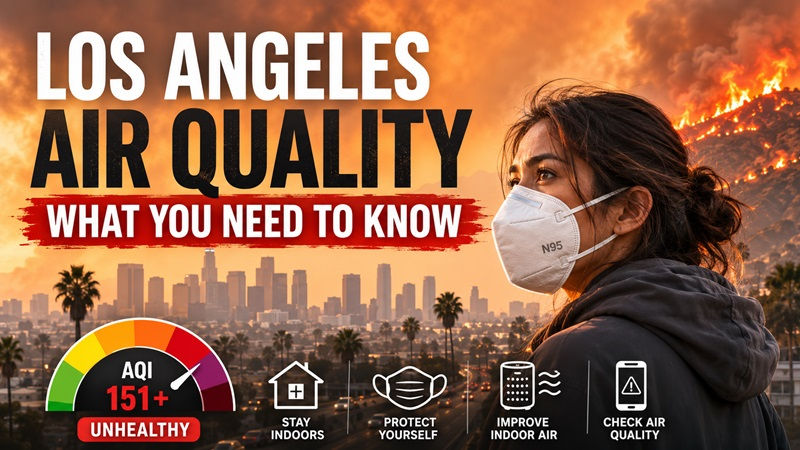
Air quality throughout Los Angeles County can deteriorate rapidly due to wildfires, industrial facility fires, refinery incidents, hazardous material emergencies, and other large smoke-producing events. During periods of strong Santa Ana winds, smoke and fine particulate pollution can spread far beyond the immediate source, affecting communities across the region—including the Compton area. Even if a fire is many miles away, changing wind conditions can create unhealthy air quality, making it important to monitor local air conditions and take appropriate precautions whenever major smoke events occur.
How Worried Should You Be?
Smoke from wildfires, industrial fires, and other large combustion events contains a complex mixture of fine particles (PM2.5), gases, and toxic compounds that can pose serious health risks. University of California studies have shown that wildfire smoke can be significantly more toxic than typical urban air pollution because it contains a broader mix of harmful pollutants.
Public health agencies advise that when air quality reaches unhealthy levels, everyone—not just those with asthma, heart disease, or other respiratory conditions—should take steps to reduce smoke exposure. Even if you are many miles from the source of a fire, changing weather patterns and Santa Ana winds can carry smoke across Southern California, affecting indoor and outdoor air quality alike.
Air Quality Index (AQI)
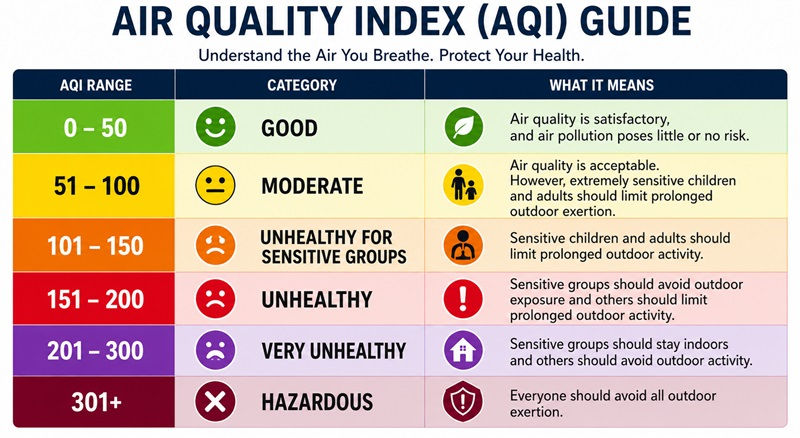
The U.S. Environmental Protection Agency categorizes air quality by the Air Quality Index (AQI) using colors and numbers:
Below 100 (Green): Generally safe (yellow is acceptable; green is ideal).
101–150 (Orange): Unhealthy for sensitive groups.
151–200 (Red): Unhealthy for everyone.
201–300 (Purple): Very unhealthy.
301 and higher (Maroon): Hazardous.
Recommendations from the Department of Public Health

General Tips
Monitor Air Quality
Check local air quality regularly using the Air Quality Index (AQI). You can use the AirNow website, the AirNow app, or the Weather app on your smartphone. Simply enter your ZIP code or location to view current air quality conditions and pollutant levels.
Stay Indoors
When air quality reaches unhealthy levels, limit the time you spend outdoors—especially children, older adults, pregnant women, and people with heart or lung conditions. Keep pets indoors whenever practical.
Keep Outdoor Air Outside
Close all windows and exterior doors during smoke events. Open them only when air quality improves enough to safely ventilate your home.
Use Your Air Conditioning Properly
If your home has central air conditioning, replace or clean the air filter as recommended by the manufacturer and use the recirculate setting to minimize drawing smoky outdoor air into your home.
Avoid Activities That Increase Indoor Air Pollution
During periods of poor air quality, avoid activities that generate additional smoke, particles, or fumes indoors, including:
Smoking or vaping
Burning candles or incense
Using fireplaces or wood-burning stoves
Cooking on gas stoves when possible
Frying foods or high-heat cooking
Vacuuming (unless using a HEPA-filter vacuum)
Using aerosol sprays or strong chemical cleaners
Strenuous indoor exercise that increases breathing rate
Additional Protective Measures
Use an Air Purifier
A portable HEPA air purifier is one of the most effective ways to reduce indoor smoke particles. If one isn't available, a properly assembled DIY box-fan air filter can also improve indoor air quality.
Clean Carefully
Use a damp cloth or damp mop to remove dust and ash. Dry sweeping or dusting can stir fine particles back into the air.
Wear an N95 Respirator Outdoors
If you must spend time outdoors during smoky conditions, wear a properly fitted N95 respirator to help reduce inhalation of fine smoke particles. Cloth masks and standard surgical masks do not provide adequate protection against PM2.5 smoke particles.
Limit Outdoor Activity
Postpone outdoor exercise, yard work, and other strenuous activities until air quality improves. The harder you breathe, the more polluted air you inhale.
A Final Thought
Wildfires, industrial fires, and other major smoke-producing incidents can occur with little warning, especially during periods of strong Santa Ana winds. Monitoring local air quality and taking a few simple precautions can significantly reduce your exposure to harmful pollutants and help protect the health of you and your family.


